
In this article
What is removal and incremental torque
In packaging QC, two numbers summarize cap application:
- Removal torque: the force needed to open the cap for the first time. Indicates whether the cap is sealing.
- Incremental torque: the difference between peak removal torque and the "plateau" torque after the band breaks. Indicates tamper-evidence band integrity.
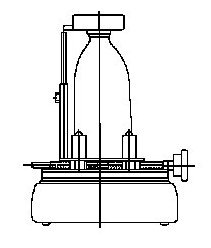
Both are measured in in.lb or kgf·cm with a bench torque tester. A good cap falls in a specific window — outside that window, either too low or too high, you have a defect to correct. As a complementary measurement to torque, it is worth tracking the cap application angle reading with a graduated protractor.
Comparison: low vs high
| Aspect | Low Torque | High Torque |
|---|---|---|
| Consumer symptom | Loose cap, opens by itself, leaks in transit. | Cap "impossible" to open; consumer complains about the package. |
| Main risk | Liquid leak / CO₂ loss. | Tamper-evidence band breaks on opening; risk of cap fracture. |
| Most common root cause | Under-application at the capper. | Excessive static torque or product on the finish. |
| Where to look first | Vertical load, turret, static torque, chuck. | Finish-cleaning spray, static torque, vertical load. |
| Cap audit | Inside diameter, correct cap type. | Deformed liner, damaged thread, wrong cap (glass vs PET). |
Low torque — root causes
Low torque is the more frequent symptom because it involves under-application as the main cause. Causes split into 3 categories:
| Item | Cause | Solution |
|---|---|---|
| 6.1.1 | Cap with incorrect inside diameter. | Replace the lot and engage technical support. |
| 6.1.2 | Wrong cap (PET on glass). | Check the box label and request the correct type. |
| 6.2.1 | Bottle finish out of specifications. | "Go/no-go" gauge. |
| 6.2.2 | No hot-end treatment on the finish (glass). | Contact the bottle supplier; check treatment ctu. |
| 6.2.3 | Deformed finish. | Inspect and discard. |
| 6.3.1 | Under-applied cap. | Audit turret, vertical load, static torque and chuck — see the under-application post. |
High torque — root causes
High torque is less frequent but tends to be associated with finish contamination (product that leaked before capping) or a defective head:
| Item | Cause | Solution |
|---|---|---|
| 7.1.1 | Wrong cap (glass on PET). | Check the cap box label. |
| 7.1.2 | Cap dimensions out of specifications. | Change the lot, contact technical support. |
| 7.1.3 | Damaged cap thread. | Change the lot, contact technical support. |
| 7.1.4 | Liner damaged, deformed or in excess. | Change the lot, contact technical support. |
| 7.2.1 | Finish out of spec. | Gauge. |
| 7.2.2 | Deformed finish. | Inspect and discard. |
| 7.2.3 | Excessive roughness on the finish (high hot-end treatment). | Report to supplier; recommendation 4-10 ctu. |
| 7.3.1 | Product on the bottle finish. | Increase the flow of the finish-cleaning spray. If none exists, consider installing one — preferably after the worm screw or before entering the feed star wheel. |
| 7.3.2 | Capping head torque too high. | Reduce the capping head static torque to 10 ± 2 in.lb. |
| 7.3.3 | Defective head. | Disassemble and locate the problem — e.g., damaged bearing, stuck spring. Consider replacing with a new magnetic capping head if wear is critical. |
| 7.3.4 | Excessive vertical load. | Reduce to 20-40 lb. |
Acceptable window: why the middle is the goal
Ideal torque is a window, not a single value. You want torque in the middle of the acceptable window for the cap in use — not skirting the limits. Why? Variability. If average torque is 15 in.lb with tolerance ±2 in.lb, the head will swing between 13 and 17. Going beyond that range, even on just a few heads, sets up a failure.
The practical consequence is simple: do not calibrate equipment to the minimum limit or the maximum limit. Calibrate to the center. Each head has its own dispersion — what is calibrated at the center stays within the window even when it drifts.
Next step
Low and high torque share several adjustments (vertical load, static torque, finish gauge) — but with opposite signs. Measurement itself is simple; cross-interpretation requires knowing the 13 related defects, in particular cocked cap at the capper, which masks inconsistent torque readings between heads. Gromar's complete guide brings the root-cause tree with cross-references between all 13.
Guide to Cap Application Problems
The 13 most common capper failures — diagnosis, root cause and correction. Free technical material.
Download the full guide →